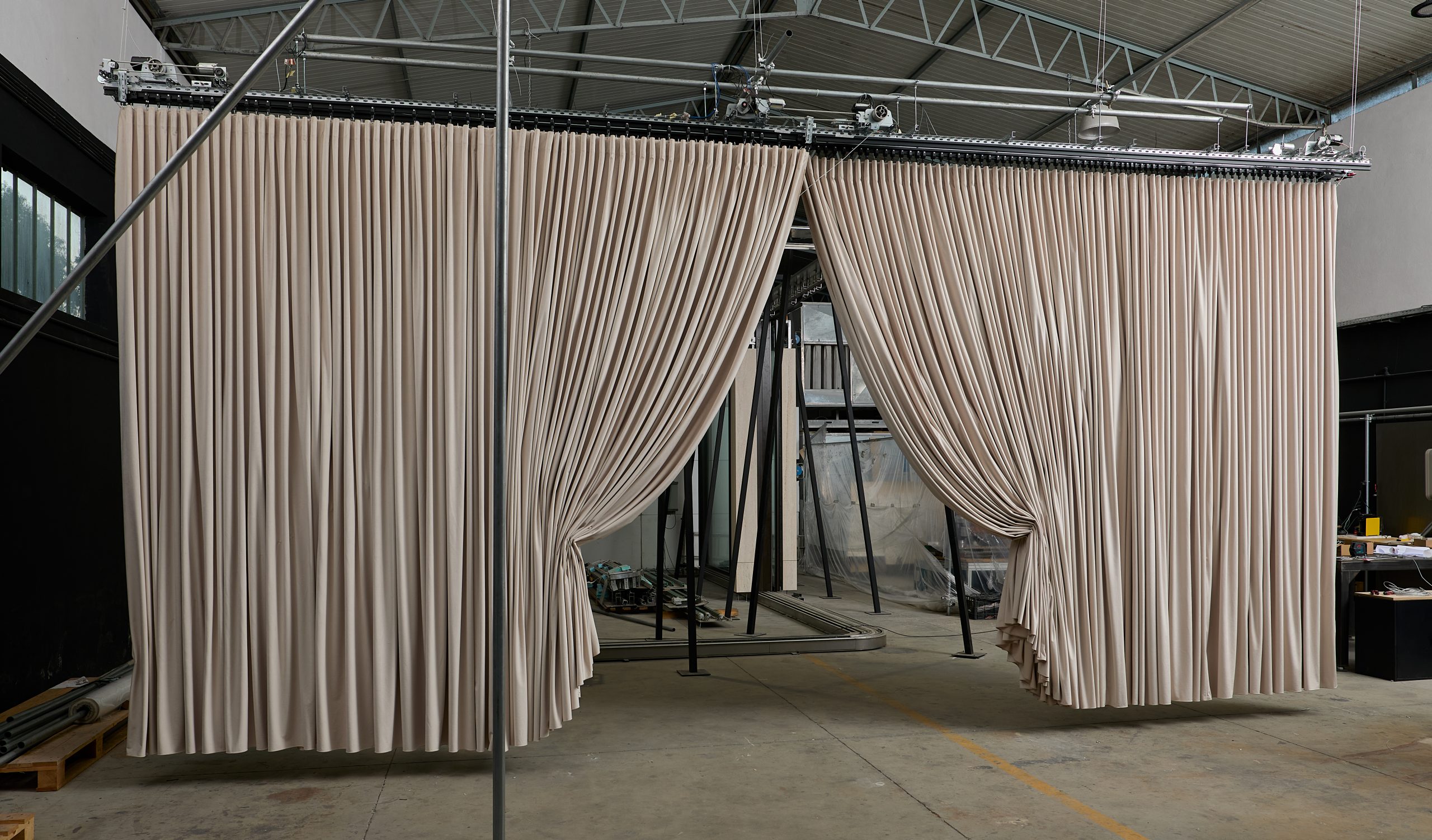
Production of the work Untitled by Inês Botelho (2003–25), in Arrabaldes de Viana © Photo by Filipe Braga
The Collection of Fundação Leal Rios, assembled by brothers Manuel and Miguel Leal Rios since 2003, was partially placed on deposit at Serralves in 2021. This body of works is highly significant for several reasons: it embodies a coherent line of thought—a very particular perspective on the art of the last two decades—and can therefore be identified as a true collection (which is quite different from a mere gathering of works); it brings to Serralves a group of works by artists who were already represented in the Collection (through acquisitions or previous deposits), adding elements that allow for a deeper understanding of their respective trajectories and thereby helping the Foundation to fulfil one of the central aims of its collecting practice: the formation of substantial bodies of work by specific artists; it adds artists and works to the Serralves Collection that broaden and enrich perspectives on artistic production over recent decades; and it far exceeds the domestic scale that is so often associated with Portuguese private collections—something that can partly be explained by the establishment of a Foundation that developed in parallel with the collection and that, since 2011, has maintained a physical space in Lisbon where works could be exhibited, stored, and conserved. This context also explains why a significant number of works presented in Auto dos Anfitriões, whose installation requires fully fledged museum conditions—specialised installation teams and dedicated exhibition spaces—are being shown for the first time since their acquisition, both to the general public and even to the collectors themselves.
The title of this exhibition revisits that of a theatrical play by the sixteenth-century Portuguese poet Luís Vaz de Camões (itself adapted from a text by the Roman playwright Plautus, which has continued to inspire playwrights, directors, composers, and filmmakers to this day) and, with it, evokes a history of derivations, appropriations, and deviations. It immediately calls to mind three characteristics that distinguish this presentation of the Leal Rios Foundation Collection: first, it underscores Serralves’ hospitable vocation and lends meaning to the idea of its Collection as a “collection of collections”; second, it argues for the convergence of times and geographies (the result of such “derivations, appropriations, and deviations”) as a feature shared by both dramaturgy and contemporary art; finally, it invokes theatre—and certain texts associated with it—as a means of shedding light on specific aspects of contemporary artistic practices.
Produced by the Serralves Foundation — Museum of Contemporary Art, the exhibition is curated by Ricardo Nicolau.
Serralves Foundation, 2026